

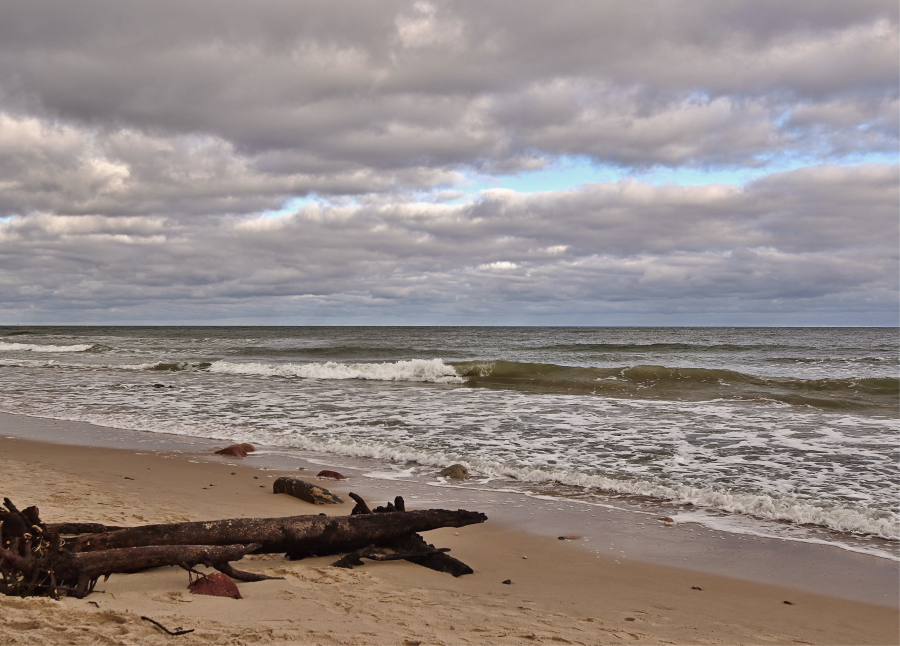
Vilnius University (VU) Faculty of Chemistry and Geosciences third-year Climatology and Hydrology student Gustė Gečaitė presented the results of her research on marine heatwaves in Baltic Sea lagoons at the 2026 student summer research internship conference “Summer of Science with RCL”, organised by the Research Council of Lithuania. Her presentation was recived a diploma for the best and most impactful presentation.
As part of the “Student Summer Internships” activity funded by the Research Council of Lithuania, G. Gečaitė, together with VU professor Donatas Pupienis, investigated changes in marine heatwaves in the Curonian, Vistula and Szczecin lagoons between 1993 and 2024. The study examined how frequently marine heatwaves occurred, how long they lasted, how intense they were and how these indicators changed across seasons and over the entire study period.
What is a marine heatwave?
Over recent decades, prolonged periods of unusually warm water have become increasingly frequent in oceans, seas and lagoons due to human-induced climate change. Oceanographers refer to these events as marine heatwaves (MHWs).
A marine heatwave is recorded when the temperature in a specific water body exceeds the 90th percentile threshold calculated from long-term data for at least five consecutive days. Put simply, at that time of year, the water remains among the warmest 10% of previously recorded temperatures for at least five days. A marine heatwave does not necessarily mean that the water is warm enough for swimming – it means that the water temperature at a specific location is unusually high for that time of year.
Research on marine heatwaves in shallow water bodies is becoming increasingly relevant. Persistently warm water can contribute to oxygen depletion, intensify algal blooms and deteriorate water quality. These changes can cause stress to fish and other organisms and affect the timing of their reproduction and migration. Marine heatwaves are therefore important not only for ecosystems, but also for fisheries, recreation and coastal communities.
Marine heatwaves are becoming more frequent
The results revealed that the highest mean number of marine heatwave events during the study period was recorded in the Szczecin Lagoon – 72. The corresponding numbers were 63 in the Curonian Lagoon and 64 in the Vistula Lagoon. The mean duration of a single event across different parts of the lagoons mostly ranged from 10 to 14 days, with the longest duration recorded in the Curonian Lagoon.
Long-term analysis showed that between 1993 and 2024, marine heatwaves became more frequent in all three lagoons, with the number of events increasing by 0.79–0.84 events per decade. The total annual number of marine heatwave days increased even more markedly. The strongest upward trend was identified in the Curonian Lagoon, where this indicator rose by an average of 12.3 days per decade.
However, no statistically significant increase in the mean duration or intensity of individual marine heatwave events was identified in any of the lagoons. This indicates that the overall thermal impact is increasing primarily because marine heatwaves are becoming more frequent and the number of unusually warm-water days is rising, rather than because individual events are becoming longer or more intense.
Seasonal analysis also revealed differences among the lagoons. The Curonian and Vistula lagoons showed the most similar patterns, with the highest number of marine heatwave days and the greatest overall thermal impact occurring from May to September, particularly during summer. In the Szczecin Lagoon, marine heatwave activity began earlier, already in spring, and occurred more frequently during winter.
The findings highlight the importance of long-term water temperature monitoring. Further research could help determine how the increasing frequency of marine heatwaves affects water quality, oxygen conditions, algal blooms and biological communities, while also contributing to the planning of fisheries management, nature conservation and coastal management measures.
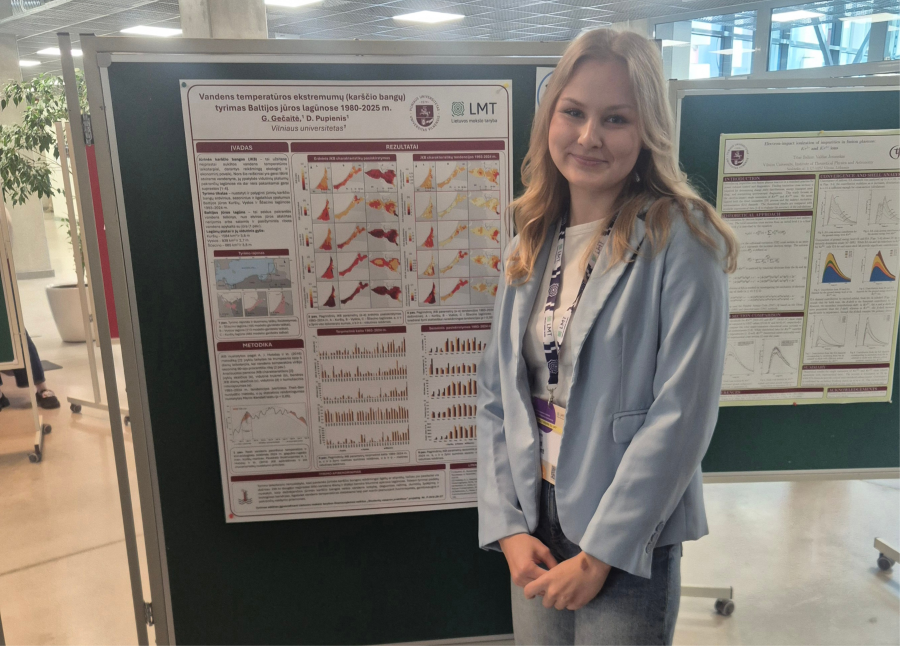
The study was carried out as part of the project “Study of Water Temperature Extremes (Heatwaves) in Baltic Sea Lagoons, 1980–2025”, No. P-SV4-26-37, under the Research Council of Lithuania-funded activity “Student Summer Internships”.