

The Vilnius University Faculty of Chemistry and Geosciences is about more than just chemistry and geosciences – it is about the people who study, work and conduct research here. At the Institutes of Chemistry and Geosciences, students and researchers from different fields come together, while our alumni apply their knowledge in a wide range of areas.
“We are FCHG” invites you to get to know the community that shapes our Faculty. Here, you will find candid conversations and stories about our people’s experiences, discoveries, and achievements.
Maab Abdulsamad Ahmed Elsheikh, postdoctoral researcher
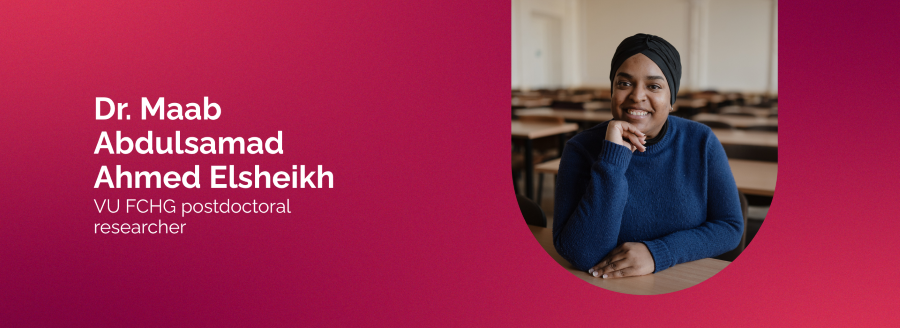
Implants and bone substitutes without the risk of infection – this is the goal pursued by Dr. Maab Abdulsamad Ahmed Elsheikh, a postdoctoral researcher at the Faculty of Chemistry and Geosciences (FCHG) of Vilnius University (VU). The researcher is developing biomaterials that combine calcium hydroxyapatite – a natural mineral that makes up the majority of bones and tooth enamel – with naturally occurring antibacterial compounds: propolis, clove oil, bee pollen and eugenol. The two-year postdoctoral fellowship at VU FCHG has opened the way for research that could become the foundation for future bone and dental implants.
According to the researcher, her work's results could first of all be useful to scientists in the field of biomaterials and regenerative medicine, who, drawing on this knowledge, could develop new bioactive materials with improved biological properties. Following further research, the benefits could also reach doctors and biomedical engineers. They could use these results as a basis for developing new bone substitutes and implant coatings that help support bone regeneration and reduce the risk of infection. “I really hope these results will help many people,” the researcher shares.
The researcher's primary specialization is dentistry, where hydroxyapatite is used in implanting missing teeth. During her doctoral studies, the researcher worked with calcium phosphate materials and studied their biological behavior when implanted into damaged bone. It was then that her interest arose in exploring their antibacterial properties, since hydroxyapatite does not have antibacterial properties on its own.
Dr. M. Elsheikh completed her dental studies at the University of Elrazi (formerly the Elrazi College of Medical and Technological Sciences) in Khartoum, Sudan, and earned her PhD degree in Japan, at Kyushu University, specializing in the field of biomaterials. For three years, Dr. M. Elsheikh worked as a dentist in Sudan and Saudi Arabia.
Calcium hydroxyapatite is a well-known biomaterial with a long history of implantation and clinical application due to its excellent biocompatibility properties – once implanted in the human body, it promotes the regeneration of bone tissue. However, Dr. M. Elsheikh's research takes a step further – her focus is on maximizing this material's potential and properties by integrating organic compounds that provide bacteria-destroying properties.
One of the most significant results of the fellowship is the development and characterization of calcium hydroxyapatite derivatives containing natural organic compounds such as eugenol / isoeugenol, propolis, clove oil, and bee pollen. The research revealed that synthesis conditions and parameters significantly affect the interaction between hydroxyapatite and organic compounds, thereby influencing the materials' physicochemical properties and potential antibacterial effectiveness. “These results have contributed to a better understanding of how bioactive compounds can be integrated into biomaterials for biomedical applications,” says Dr. M. Elsheikh.
The research findings are supported by scientific publications and form the basis for further work related to bacteria-inhibiting bone substitute materials.
The fellowship at VU FCHG provided the researcher excellent opportunities to establish connections and collaborate with institutions both in Lithuania and abroad. Domestically, she collaborated with the Center for Physical Sciences and Technology (FTMC), and internationally with Dr. Monika Mortimer's group at the National Institute of Chemical Physics and Biophysics (NICPB) in Tallinn, Estonia.
In the coming years, the researcher plans to expand her knowledge and continue developing multifunctional biomaterials for bone tissue engineering and regenerative medicine. The work is also expected to expand through the use of advanced characterization methods as well as in vitro and in vivo studies, potentially leading in the future to practical application in medicine that would help restore bones and prevent infections.
The researcher shared her experiences, challenges, and impressions of Lithuania in an interview.
In a previous interview, Dr. Maab Abdulsamad Ahmed Elsheikh talked about her scientific journey before joining us.
Leungo Kushatha Mbaiwa, alumna

From Botswana to the laboratories of Vilnius University, Leungo Kushatha Mbaiwa’s academic journey has spanned across continents. After completing her bachelor’s degree in Pharmaceutical Engineering in China, she brought her passion for chemistry to Lithuania, where she recently defended her master’s thesis. In this interview, Leungo shares her experiences adapting to a new culture, navigating the challenges of biosensor research, and the impact of finding a supportive community far from home.
Could you tell us a bit about your background and academic journey? How did chemistry become a part of your life?
I grew up in Selebi-Phikwe, a small town in Botswana that is well known for its strong educational culture and emphasis on academic achievement. I completed my primary school and high school education there before moving to China to pursue my bachelor’s degree in Pharmaceutical Engineering. Living and studying in China was a transformative experience for me both academically and personally. It exposed me to a different educational system, new cultures, and advanced scientific research environments.
Chemistry became an important part of my life during my undergraduate studies. I became fascinated by how chemistry connects science, medicine, and technology, especially in areas related to human health and analytical research. My pharmaceutical engineering background strengthened my interest in laboratory work, problem-solving, and scientific innovation, which later motivated me to delve into nanochemistry research.
After studying for four years in China, during which the COVID-19 pandemic prevented many international students from returning home, I decided to take a gap year before starting a master’s degree. After graduation I really wanted to reconnect with my family and friends after such a long time away. I returned to Botswana and worked as an English teacher for a year, which is another field I am passionate about. Teaching allowed me to grow in communication, patience, and leadership skills, and it reminded me how important education is in shaping people’s futures.
Why did you decide to choose Lithuania and Vilnius University for your master's studies?
I heard about Lithuania and Vilnius University from my current husband. As I learned more about the country and the University, I became very interested in the Nanochemistry and Entrepreneurship master’s programme because it aligned closely with my scientific interests and future goals. I applied, got accepted, and moved to Lithuania to begin my master’s journey at the Faculty of Chemistry and Geosciences.
What surprised you the most when you first arrived in Lithuania? Did you experience any culture shock and what helped you adapt?
When I first arrived, I experienced a mixture of excitement and uncertainty. The challenge I anticipated the most was difficulty communicating because I was moving to a completely different country and culture. However, I was pleasantly surprised to find that many people spoke English quite well, especially within the University community, which made communication much easier than I expected. The University also made a real effort to help international students adapt by offering Lithuanian language lessons. Even though I am still learning, being able to say basic phrases and understand some everyday expressions helped me feel more welcomed and comfortable living here.
Another surprise for me was the quietness and calmness of everyday life compared to what I had become used to in China. The weather was also a major adjustment, especially the cold winters. There was definitely some culture shock at the beginning, especially adapting to a different academic system and communication style, but over time Lithuania started to feel more familiar and comfortable.
Have you noticed any differences in academic culture between what you were used to and what you found here, in Lithuania? How was your experience working with fellow students, researchers and supervisor?
One of the biggest differences I noticed in Lithuania’s academic culture was the emphasis on independence and critical thinking. Students are expected to manage their own work, analyze results independently, and actively contribute ideas during research discussions. Although this was difficult for me at first, it ultimately helped me become more confident as a researcher and strengthened my problem-solving abilities.
At first, adjusting to the culture here was challenging because I had become very familiar with the structure and learning style in China. However, what truly helped me adapt was the support system around me. My supervisor, Professor Aušra Valiūnienė, played a vital role throughout my master’s journey. When I first arrived at Vilnius University and was still getting used to a completely new academic environment, she ensured that I had the support I needed to adapt both academically and personally. My supervisor also introduced me to her PhD student, who became my guide and mentor in the laboratory. Through their guidance, I learned how to properly carry out experiments, analyze results, and gradually become more independent.
I was also fortunate to work with an amazing department team made up of professors, researchers, and fellow students who were all warmly welcoming and supportive. Whenever I was confused or faced challenges in the lab, I knew I could ask for help and receive guidance. Professor Aušra Valiūnienė also regularly checked on my progress, discussed my experiments with me, and provided advice whenever needed. I am truly grateful to have worked with such encouraging young scientists who are doing incredible research themselves and creating a supportive academic environment.
You have just successfully defended your master's thesis. Could you explain what your research was about?
My master’s thesis focused on bacterial toxin detection using regenerable tethered bilayer sensors. The research explored how tethered bilayer lipid membranes (tBLMs) formed on fluorine-doped tin oxide (FTO) surfaces can be used to detect pore-forming bacterial toxins such as alpha-hemolysin. The goal of the research was to study whether these membrane-based sensors could be regenerated and reused after toxin exposure while still maintaining reliable sensing performance.
The project involved working with self-assembled monolayers (SAMs), electrochemical impedance spectroscopy (EIS), lipid bilayers, and bacterial toxins. I tested different SAM compositions, including ATS-only and WC14/ATS systems, to determine which produced the most stable membranes and the best toxin detection performance. A large part of the work involved understanding how membrane regeneration changes the submembrane environment and how these changes affect sensor reliability over repeated cycles.
One of the most interesting outcomes of my research was that, although full regeneration of the membranes after toxin and serum exposure remained challenging, the ATS-only SAM platform demonstrated surprisingly stable and reproducible toxin detection performance in a simplified single-use format. The consistency and quality of some of the experimental results suggested promising scientific potential for future development and further investigation. These findings may contribute to ongoing research in low-cost and practical biosensor technologies for applications in environmental monitoring, food safety, and clinical diagnostics. It was especially rewarding to see that the work produced meaningful and scientifically valuable results that could potentially open pathways for future publication and continued research in this area.
What were the biggest challenges during your research and the most valuable lessons you learned?
The biggest challenges during my research were the repetitiveness and the need to maintain consistency. In electrochemistry and surface chemistry, experiments often need to be repeated many times under carefully controlled conditions. There were moments when I had to repeat the same experiment over and over again, sometimes close to a hundred times, while learning from mistakes and trying to improve the results each time. At times this could be exhausting and frustrating, especially when small differences in surface preparation or membrane formation affected the entire outcome of the experiment.
What helped me overcome these challenges was having a strong support system around me. Working with a supportive team and department made a huge difference in my journey. I always felt encouraged to keep trying, ask questions, and continue learning. Beyond academics, my faith in God also gave me strength and motivation throughout difficult moments. It helped me remain hopeful and focused even when experiments did not go as planned.
Another challenge I faced when I moved to Lithuania was realizing that to my knowledge, I was the only person from Botswana in the country at the time. Coming to a completely new country without people from home or familiar cultural connections was emotionally difficult at first. There were moments when I felt homesick and isolated because I did not have my own community nearby.
However, this experience also became one of the most beautiful parts of my journey. Being in such an international environment allowed me to build friendships with people from many different countries and cultures. I met amazing students and researchers from different backgrounds, and through them I learned so much academically as well as personally. These friendships helped me adapt, feel supported, and become more open-minded about the world. In many ways, Lithuania taught me that even when you are far away from home, you can still create a sense of family and belonging through the people you meet along the way.
Looking back at your studies in Lithuania, what achievement or moment are you most proud of? What are your next steps after graduation?
Successfully defending my master’s thesis is definitely one of the moments I am most proud of. It represented not only academic success but also personal growth. Moving to a completely different country, adapting to a new environment, conducting advanced scientific research, and completing my degree successfully was a truly rewarding achievement for me. I was especially proud that during my defense I was able to confidently answer most of the questions and explain my research clearly.
After graduation, I hope to continue growing in the field of chemistry and scientific research, particularly in areas related to nanomaterials chemistry, biosensors, and electrochemistry. I would also love to see the ideas from my research continue developing further in the future, especially in creating more practical and affordable biosensor systems that could potentially be used in real-world medical, environmental, or food safety applications. At the same time, I remain open to opportunities that allow me to continue learning, growing professionally, and contributing to scientific innovation.
What would you say to other international students considering studying at the Faculty of Chemistry and Geosciences of Vilnius University?
I would say: do not be afraid to challenge yourself. Moving to another country and adapting to a new environment may feel overwhelming at first, but it is also one of the most rewarding experiences you can have. Vilnius University provides a strong academic environment with valuable research opportunities and supportive researchers. If you are willing to work hard, stay open-minded, and ask for help when needed, you will grow both academically and personally. My experience here has taught me the importance of resilience, independence, confidence, and community. I am very grateful for the journey.
Gabrielė Meižytė, postdoctoral researcher

Bone implantation often marks not only the beginning of healing, but also a battle against infection. As the number of antibiotic-resistant bacteria continues to rise, scientists around the world are searching for ways to integrate infection protection directly into implants themselves. Dr. Gabrielė Meižytė, a postdoctoral researcher in the Faculty of Chemistry and Geosciences (FCHG) at Vilnius university (VU), is developing a bioceramics material that could one day not only help restore damaged bone tissue, but also actively inhibit the spread of bacteria.
Materials that protect against infections
"The need for such materials in bone tissue regenerative medicine is extremely high, particularly in the fields of orthopaedics and dentistry. As the prevalence of antibiotic-resistant microorganisms grows, the development of biomaterials with antibacterial properties is becoming increasingly pressing. This project aims to enrich synthetic calcium phosphate materials used in medicine with antibacterial agents, ensuring their gradual release at the implantation site. This would help suppress inflammatory processes and is expected to reduce the risk of implant rejection," says Dr. G. Meižytė.
To this end, Dr. G. Meižytė is carrying out a postdoctoral project entitled "An Approach to the Functionalisation of Calcium Hydroxyapatite Bioceramics: A Pathway from a Biocompatible Material to Advanced Functional Materials with Antibacterial Properties." The project explores innovative solutions for developing materials that not only restore damaged bone tissue, but also protect against post-implantation infections through their antibacterial properties.
How biomaterials that replicate human bone are developed
The researcher notes that while commercialisation potential exists, the path to practical application is a long one: "There are two possibilities – the theoretical one (preclinical studies, a manufacturing quality system, EU certification) or collaboration with industry partners or implant manufacturers who have the necessary infrastructure and expertise."
Over the next two years, she hopes to develop durable composite granules of a specific size, exhibiting antibacterial properties and controlled solubility in a physiological environment. The researcher's greatest challenge is identifying the optimal synthesis conditions that would allow the desired granule properties to be maintained in the final composite. Studies on antibacterial properties are planned in collaboration with colleagues from the Life Sciences Centre and the Centre for Physical Sciences and Technology.
Dr. G. Meižytė's research reflects one of the most important directions in contemporary biomaterials science – the pursuit of developing materials that are not only effective, but also sustainable. In creating new composites, the researcher draws on the principles of green chemistry: she uses an easily accessible natural raw material – calcium sulphate – carries out synthesis at low temperature, and avoids organic solvents entirely.
"This approach makes it possible not only to reduce energy consumption and environmental impact, but also to obtain a material whose properties more closely resemble those of natural human bone. Low synthesis temperature is important not only for its environmental benefits. It allows for the production of a low-crystallinity material that resembles human bone tissue not only in chemical composition, but also in microscopic structure. Such biomimetic materials are attracting growing attention from researchers worldwide, as they are considered one of the most promising directions in regenerative medicine. This project therefore aligns with international trends in biomaterials research, where increasing emphasis is being placed not only on medical efficacy, but also on sustainability," the researcher explains.
From Oxford to Vilnius
A postdoctoral fellowship at VU FCHG is not only a professional step forward, but also a return to Lithuania. "I feel desire to give something back to Lithuania, as this is where I grew up. I want to contribute to building Lithuania's future and strengthening its science, and to do work that is meaningful and beneficial to society. Within the Vilnius University research community, I hope to build connections, engage with my colleagues' research, and collaborate. In the future, I would like to continue my research, and perhaps expand its directions and venture into new areas," the researcher shares.
Dr. G. Meižytė began her academic journey in the United Kingdom – she obtained her master's degree in Glasgow and her PhD at the prestigious University of Oxford. Vilnius was not a coincidental, but a deliberate stop on her scientific journey. She chose VU FCHG for two reasons – a qualified team and suitable infrastructure: "Prof. Aivaras Kareiva and Assoc. Prof. Inga Grigoravičiūtė, my direct supervisor, have more than a decade of experience in this field. In addition, the faculty has all the equipment needed for materials synthesis and characterisation, and through collaboration with colleagues from other research institutions, opportunities arise to carry out studies on the antibacterial properties of the synthesised composites."
The researcher's academic journey has consistently shaped her scientific interests. The decision to deepen her expertise in the field of bioceramics was driven not only by her experience, but also by a desire to create added value: "When I saw the opportunity to apply for a postdoctoral fellowship, I realised I had the experience needed and that I could do something good and useful in the field of synthetic bone substitute development." The researcher is particularly fascinated by the study of materials at the molecular level, which allows for a deeper understanding of their mechanisms of action and a purposeful search for new applications.
Inga Gabriūnaitė, lecturer, researcher

From March 16 to 21, Dr. Inga Gabriūnaitė, a lecturer at the Faculty of Chemistry and Geosciences at Vilnius University, together with representatives of the Lithuanian consortium (representatives of Lithuanian universities, research institutes, and the business sector) visited one of the most prestigious universities for science and engineering—the Massachusetts Institute of Technology (MIT). MIT is located in Cambridge, USA, and has been attracting the brightest scientists, engineers, and innovators for more than 150 years. The visit took place for collaboration purposes – work is underway with MIT consortium partners on the development of a pilot module. The module, which will include courses from MIT, will be focused on the field of energy and the development of soft skills (working in interdisciplinary groups, entrepreneurship, etc.). It will be available for third-year bachelor's students from various study programs across Lithuanian higher education institutions.
Dr. I. Gabriūnaitė visited the Deshpande Center for Technological Innovation, which helps researchers turn technologies developed in laboratories into real-world business solutions.
„Center Director Rana K. Gupta presented how the center supports scientists in commercializing lab-developed technologies by engaging business representatives. The director emphasized that MIT's ideology is based on collaboration, not competition, in pursuit of shared goals. For example, Harvard University is located nearly 3 km from MIT and, although they are competing institutions, researchers and students share library resources“, – said the researcher.
Dr. I. Gabriūnaitė had the opportunity to meet with representatives from the MIT library, who shared the research they conducted: „Director Chris Bourg explained that due to reduced visitor numbers in the libraries following the COVID-19 pandemic, one of the five library buildings is being closed and will be repurposed for other MIT activities. She also shared a study on how MIT is saving funds that can be reallocated to other needs.”
The visit provided a great deal of valuable information. The researcher participated in a discussion with the last United States Ambassador to Moscow, John J. Sullivan, and heard about his experiences following the outbreak of the war. Dr. Gabriūnaitė also visited the Northway Biotech office in Boston, where she learned about their operations and the development of new cancer drugs. The researcher also took part in a tour of a nuclear reactor laboratory housing a 6 MW reactor dedicated to scientific research. This is the second largest such reactor in the United States. „They carry out various scientific and commissioned research projects. It is the only institution in the country where students can directly participate in scientific activities related to nuclear reactions. We also had the opportunity to attend student research presentations,“ – said Dr. I. Gabriūnaitė.
The researcher shares that there were many interesting and significant meetings with representatives from various departments, but the purpose of the trip was the development of a pilot module in Lithuania, discussed with Dana Doyle, the director of MIT Open Learning. The module is being developed together with MIT lecturers and seven Lithuanian higher education institutions (Vilnius University, VILNIUS TECH, Kaunas University of Technology, Vytautas Magnus University, Vilnius Academy of Arts, Klaipėda University, and Mykolas Romeris University). The module, which will include courses from MIT, will be focused on the field of energy and the development of soft skills (working in interdisciplinary groups, entrepreneurship, etc.). It will be available for third-year bachelor's students from various study programs across Lithuanian higher education institutions.
The intensive work week also left room for unexpected impressions. Dr. Inga Gabriūnaitė shares that she had the chance to watch her first NBA game, in which the home team Boston Celtics defeated the Golden State Warriors, and after the game – to walk around the court.
Dr. Inga Gabriūnaitė expresses her sincere gratitude to MIT representatives Gediminas Urbonas, Elizabeth Wood, and Ekaterina Zabrovski for their warm welcome, the Lithuanian consortium and Ina Žurkuvienė for organizing the trip, and the entire Lithuanian delegation for new connections and interesting discussions throughout the journey.
Camille Robert-Boeuf, former postdoctoral intern
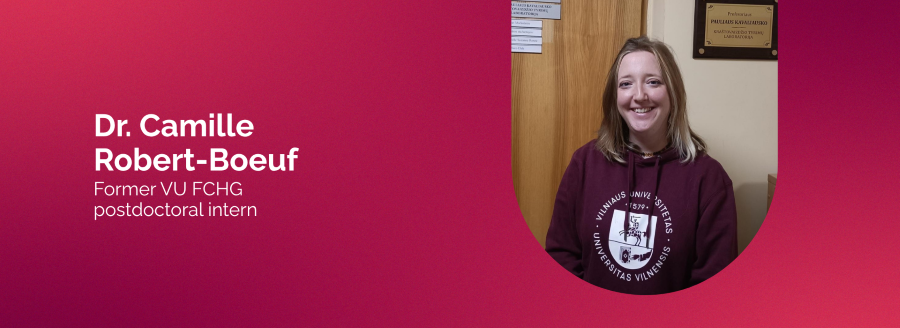
In 2024–2025, geographer Dr. Camille Robert-Boeuf completed a postdoctoral internship at the Institute of Geosciences of the Faculty of Chemistry and Geosciences of VU. Her research focused on the transformation of agricultural landscapes in Central Europe, especially in Lithuania and Poland. The postdoc was particularly pleased with the dynamic, open and welcoming atmosphere of the Department of Geography and Landscape Management. For more information about the intern's impressions, we invite you to read the interview.
Could you share your impressions of working at the Institute of Geosciences, Faculty of Chemistry and Geosciences, Vilnius University?
I worked for a year and a half (between 2024 and 2025) at the Institute of Geosciences and the Department of Geography and Land Management of Vilnius University. I worked particularly with my supervisor, Prof. Jurgita Mačiulytė. It was a delightful experience, during which I learnt a lot about Lithuanian rural geography. The university environment and the city of Vilnius were enjoyable.
How would you describe the atmosphere of collaboration with the lecturers of the Institute of Geosciences and the entire staff of the Department of Geography and Land Management?
The atmosphere of collaboration was good; people were very open and curious about my research. I specifically worked with colleagues from the PAScapes Centre (The (Post)Authoritarian Landscapes Research Centre): Prof. Jurgita Mačiulytė, Assoc. Prof. Ieva Misiūnė, Assoc. Prof. Ričardas Skorupskas, Prof. Darijus Veteikis, and Julius Mačiulaitis. I enjoyed working with them. In the department, Prof. Dovilė Krupickaitė gave me the opportunity to present my research and talk with the students. It was extremely valuable for me to exchange ideas with her and also with Assoc. Prof. Rasa Šimanauskienė.
More generally, I found a dynamic team of geographers who very well welcome foreign researchers like me. I also gained insight into the geography research dynamics in Lithuania and its educational methods, which was very enlightening. I understood how geographers work here and how they teach students. Indeed, there are some differences, but also some similarities with the French context.
I would like to express my gratitude to everyone for the warm welcome and assistance I received during my stay in Vilnius.
What is the main focus of your research, and what specific goals are you pursuing with it?
I have a PhD in social geography, with a specialisation in European peri-urban and rural areas. My previous research has focused on Russia and France, and I am currently concentrating on the transformation of agricultural landscapes in Central Europe, particularly in Lithuania and Poland. As part of the PAScapes Centre team, we aimed to understand the recent developments in the Lithuanian farming sector. We conducted a multi-scale analysis, and my particular interest was in the local scale. Alongside Jurgita Mačiulytė, we sought to move beyond mere statistics to explore the local changes occurring in small and medium-sized farms. To this end, we conducted around fifty interviews with farming families and visited farms. In the research team, my goal was to study the role of women in transforming Lithuanian agricultural landscapes and to compare this situation with that in Poland. Thus, I also conducted some interviews on Polish farms, particularly with Ukrainian female seasonal workers.
In what ways do you believe your research contributes to the field of modern geography and landscape management, or the broader scientific context?
My work has generated new insights into the changes occurring in agricultural landscapes and the living and working conditions of women in the Polish and Lithuanian farming sector. Together with Jurgita Mačiulytė, I have demonstrated that small farms have undergone significant transformations in recent years, resulting in changes to the landscapes they cultivate (changes in size, types of production, etc.). Moreover, I have highlighted that women play a vital and sometimes decisive role in the maintenance and renewal of these agricultural landscapes in both Lithuania and Poland.
From an epistemological perspective, I have collaborated with Jurgita Mačiulytė to demonstrate that conducting field surveys—such as interviews and observations on farms—is essential for clarifying and supplementing statistical data. Field surveys also offer valuable insights into statistical trends, as they uncover weak signals that may initially seem insignificant but are crucial for understanding farmers' work, their lifestyles, and the evolution of landscapes.
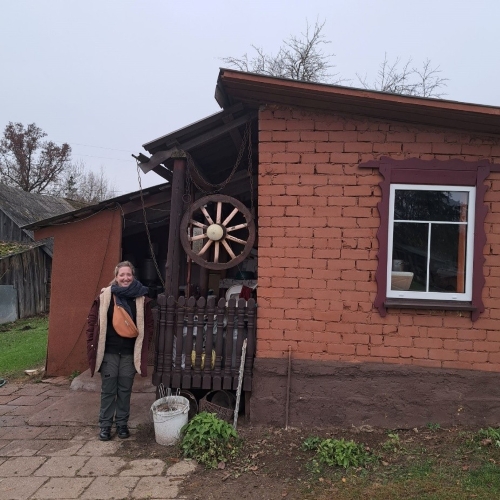
Camille Robert-Boeuf photo from personal archive
What are your immediate goals and future aspirations within your scientific research?
In the short term, I want to continue my work with my colleagues at the PAScapes Centre. We still have several results to publish, and I would like to extend some analyses and conduct additional field surveys. In the long term, I hope to foster collaborations between French and Lithuanian geographers, possibly by inviting French colleagues to Vilnius and vice versa.
What is the greatest professional achievement you have realized while working with the Institute of Geosciences and the staff of the Department of Geography and Land Management?
I have two significant achievements I would like to highlight.
The first is scientific: I am proud to have made some interesting initial findings regarding rural geography in Central Europe, with a primary focus on the role of women in the countryside.
The second achievement is more personal and relates to my academic career. Through my work at Vilnius University and my collaborations with the Department of Geography and Landscape Management, I successfully became a research fellow at the CNRS (Centre National de la Recherche Scientifique) after passing a highly competitive examination in France. Without this experience abroad at a prestigious research institute, I wouldn't have secured this job. Joining this Department and the Institute as a postdoctoral researcher has genuinely been a significant professional achievement for me.