

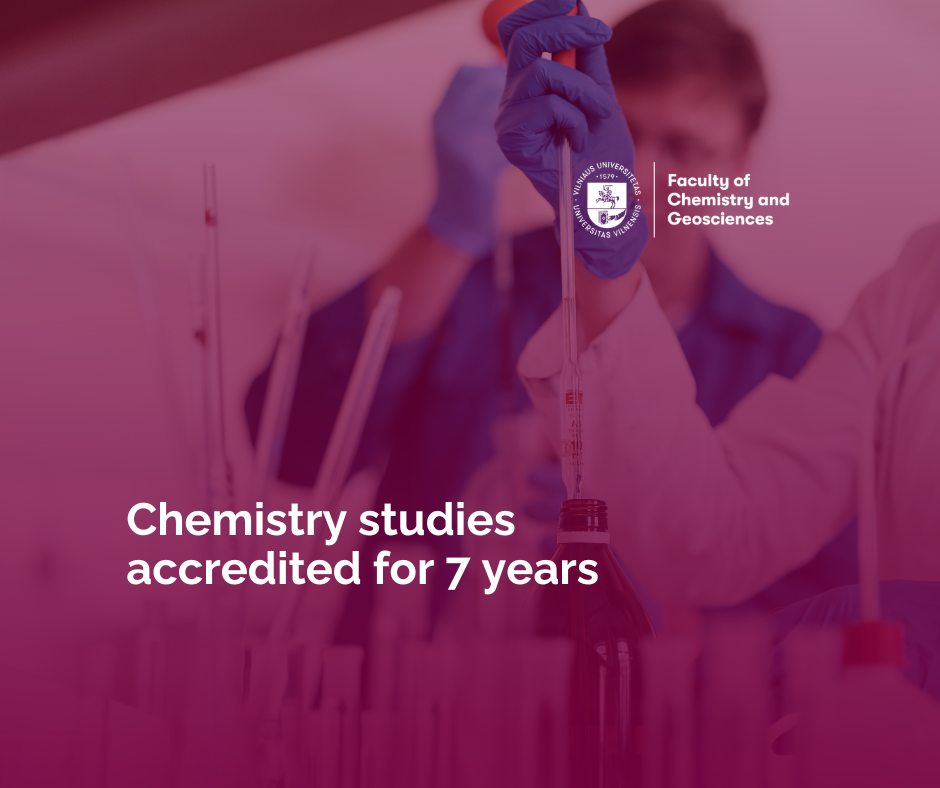
The Centre for Quality Assessment in Higher Education has completed the external expert evaluation of Bachelor's (Chemistry, Cosmetic Chemistry, and Nanomaterials Chemistry programmes) and Master's (Chemistry and Nanomaterials Chemistry and Entrepreneurship programmes) study programmes in the field of chemistry carried out by Vilnius University. We are happy to announce that the chemistry field studies have been granted the maximum accreditation period of seven years.
The expert evaluation ensures that the chemistry field studies meet the highest quality requirements, guaranteeing relevant and valuable study content and teaching methods. Furthermore, the accreditation demonstrates that the knowledge and competencies acquired during the studies are in demand in today's job market.
The external study programme evaluation panel consisted of lecturers from foreign higher education institutions with experience in higher education management, a social partner, and a student representative. The programme was assessed by analysing various areas of its implementation – the study programme's aims, outcomes and content, the links between research and study activities, student admission and support, the course of studies, study achievements and graduate employment, staff, material resources, as well as study quality management and communication.
Summary of the external evaluation conclusions:
The chemistry study programmes align with both Lithuania's strategic goals ("Lithuania 2030", Innovation Development Programme) and European standards. The Bachelor's and Master's programmes prepare specialists by combining theory, laboratory practice, and research-based learning, while graduates acquire interdisciplinary and entrepreneurial competencies required in today's market. The study content reflects current trends, providing students with both theoretical knowledge and practical skills, with involvement in laboratory research from the very first year of studies.
It is worth noting that the programmes are taught by highly qualified specialists – active researchers publishing in high-impact scientific journals, the majority holding doctoral degrees, with interdisciplinary competencies and industrial experience working in companies. The professional development of academic staff is ensured through training provided by the Educational Competence Centre, the EdTech project, and "Erasmus+" mobility opportunities, enabling the maintenance of high academic standards and innovative, research-based teaching. Lecturers and students work in renovated classrooms, specialised laboratories, and have access to advanced research equipment. Well-developed library services and digital platforms foster students' information literacy and independent research skills. The planned opening of a new building in 2027 will further improve study conditions and strengthen graduates' competencies.
Assessment of studies is based on cumulative methods and feedback. Academic integrity is ensured through clear regulations and plagiarism detection tools. No cases of academic dishonesty were recorded during the evaluation period.
Examples of outstanding quality:
The chemistry study programme at Vilnius University offers a strong theoretical foundation, combining it with practical laboratory work and research from the very start of studies. The programmes are led by active researchers, while international mobility opportunities, transparent assessment, and close collaboration with social partners ensure high study quality and competitiveness.
The Institute of Chemistry has an informal mentoring system in which experienced lecturers and advanced students assist their colleagues in mastering experimental techniques and innovative research methods. By encouraging collaborative problem-solving and knowledge exchange beyond the boundaries of the formal study programme, this system complements structured qualification development and mobility programmes, ensuring the continuous advancement of teaching and research competencies. Furthermore, it fosters a collegial academic culture that promotes professional growth, adaptability to change, and the dissemination of good practice, thereby strengthening both pedagogical and scientific expertise.
At the Faculty of Chemistry and Geosciences, research is an integral part of the study process – active researchers incorporate the latest scientific achievements into the study content, while students participate in laboratory research from the very beginning and prepare high-level final theses. International collaboration, mobility opportunities, and partnerships with industry ensure that graduates acquire advanced, research-based competencies.