Read more
Why did you decide to choose Lithuania and Vilnius University for your master's studies?
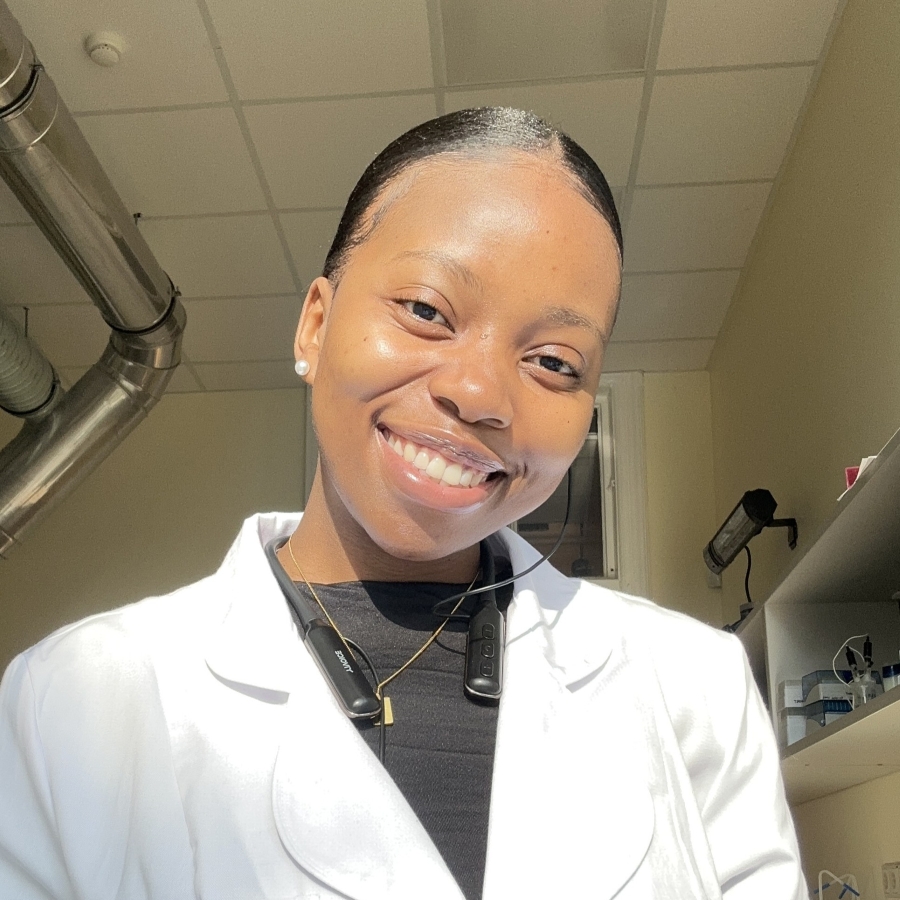
I heard about Lithuania and Vilnius University from my current husband. As I learned more about the country and the University, I became very interested in the Nanochemistry and Entrepreneurship master’s programme because it aligned closely with my scientific interests and future goals. I applied, got accepted, and moved to Lithuania to begin my master’s journey at the Faculty of Chemistry and Geosciences.
What surprised you the most when you first arrived in Lithuania? Did you experience any culture shock and what helped you adapt?
When I first arrived, I experienced a mixture of excitement and uncertainty. The challenge I anticipated the most was difficulty communicating because I was moving to a completely different country and culture. However, I was pleasantly surprised to find that many people spoke English quite well, especially within the University community, which made communication much easier than I expected. The University also made a real effort to help international students adapt by offering Lithuanian language lessons. Even though I am still learning, being able to say basic phrases and understand some everyday expressions helped me feel more welcomed and comfortable living here.
Another surprise for me was the quietness and calmness of everyday life compared to what I had become used to in China. The weather was also a major adjustment, especially the cold winters. There was definitely some culture shock at the beginning, especially adapting to a different academic system and communication style, but over time Lithuania started to feel more familiar and comfortable.
Have you noticed any differences in academic culture between what you were used to and what you found here, in Lithuania? How was your experience working with fellow students, researchers and supervisor?
One of the biggest differences I noticed in Lithuania’s academic culture was the emphasis on independence and critical thinking. Students are expected to manage their own work, analyze results independently, and actively contribute ideas during research discussions. Although this was difficult for me at first, it ultimately helped me become more confident as a researcher and strengthened my problem-solving abilities.
At first, adjusting to the culture here was challenging because I had become very familiar with the structure and learning style in China. However, what truly helped me adapt was the support system around me. My supervisor, Professor Aušra Valiūnienė, played a vital role throughout my master’s journey. When I first arrived at Vilnius University and was still getting used to a completely new academic environment, she ensured that I had the support I needed to adapt both academically and personally. My supervisor also introduced me to her PhD student, who became my guide and mentor in the laboratory. Through their guidance, I learned how to properly carry out experiments, analyze results, and gradually become more independent.
I was also fortunate to work with an amazing department team made up of professors, researchers, and fellow students who were all warmly welcoming and supportive. Whenever I was confused or faced challenges in the lab, I knew I could ask for help and receive guidance. Professor Aušra Valiūnienė also regularly checked on my progress, discussed my experiments with me, and provided advice whenever needed. I am truly grateful to have worked with such encouraging young scientists who are doing incredible research themselves and creating a supportive academic environment.
You have just successfully defended your master's thesis. Could you explain what your research was about?
My master’s thesis focused on bacterial toxin detection using regenerable tethered bilayer sensors. The research explored how tethered bilayer lipid membranes (tBLMs) formed on fluorine-doped tin oxide (FTO) surfaces can be used to detect pore-forming bacterial toxins such as alpha-hemolysin. The goal of the research was to study whether these membrane-based sensors could be regenerated and reused after toxin exposure while still maintaining reliable sensing performance.
The project involved working with self-assembled monolayers (SAMs), electrochemical impedance spectroscopy (EIS), lipid bilayers, and bacterial toxins. I tested different SAM compositions, including ATS-only and WC14/ATS systems, to determine which produced the most stable membranes and the best toxin detection performance. A large part of the work involved understanding how membrane regeneration changes the submembrane environment and how these changes affect sensor reliability over repeated cycles.
One of the most interesting outcomes of my research was that, although full regeneration of the membranes after toxin and serum exposure remained challenging, the ATS-only SAM platform demonstrated surprisingly stable and reproducible toxin detection performance in a simplified single-use format. The consistency and quality of some of the experimental results suggested promising scientific potential for future development and further investigation. These findings may contribute to ongoing research in low-cost and practical biosensor technologies for applications in environmental monitoring, food safety, and clinical diagnostics. It was especially rewarding to see that the work produced meaningful and scientifically valuable results that could potentially open pathways for future publication and continued research in this area.
What were the biggest challenges during your research and the most valuable lessons you learned?
The biggest challenges during my research were the repetitiveness and the need to maintain consistency. In electrochemistry and surface chemistry, experiments often need to be repeated many times under carefully controlled conditions. There were moments when I had to repeat the same experiment over and over again, sometimes close to a hundred times, while learning from mistakes and trying to improve the results each time. At times this could be exhausting and frustrating, especially when small differences in surface preparation or membrane formation affected the entire outcome of the experiment.
What helped me overcome these challenges was having a strong support system around me. Working with a supportive team and department made a huge difference in my journey. I always felt encouraged to keep trying, ask questions, and continue learning. Beyond academics, my faith in God also gave me strength and motivation throughout difficult moments. It helped me remain hopeful and focused even when experiments did not go as planned.
Another challenge I faced when I moved to Lithuania was realizing that to my knowledge, I was the only person from Botswana in the country at the time. Coming to a completely new country without people from home or familiar cultural connections was emotionally difficult at first. There were moments when I felt homesick and isolated because I did not have my own community nearby.
However, this experience also became one of the most beautiful parts of my journey. Being in such an international environment allowed me to build friendships with people from many different countries and cultures. I met amazing students and researchers from different backgrounds, and through them I learned so much academically as well as personally. These friendships helped me adapt, feel supported, and become more open-minded about the world. In many ways, Lithuania taught me that even when you are far away from home, you can still create a sense of family and belonging through the people you meet along the way.
Looking back at your studies in Lithuania, what achievement or moment are you most proud of? What are your next steps after graduation?
Successfully defending my master’s thesis is definitely one of the moments I am most proud of. It represented not only academic success but also personal growth. Moving to a completely different country, adapting to a new environment, conducting advanced scientific research, and completing my degree successfully was a truly rewarding achievement for me. I was especially proud that during my defense I was able to confidently answer most of the questions and explain my research clearly.
After graduation, I hope to continue growing in the field of chemistry and scientific research, particularly in areas related to nanomaterials chemistry, biosensors, and electrochemistry. I would also love to see the ideas from my research continue developing further in the future, especially in creating more practical and affordable biosensor systems that could potentially be used in real-world medical, environmental, or food safety applications. At the same time, I remain open to opportunities that allow me to continue learning, growing professionally, and contributing to scientific innovation.
What would you say to other international students considering studying at the Faculty of Chemistry and Geosciences of Vilnius University?
I would say: do not be afraid to challenge yourself. Moving to another country and adapting to a new environment may feel overwhelming at first, but it is also one of the most rewarding experiences you can have. Vilnius University provides a strong academic environment with valuable research opportunities and supportive researchers. If you are willing to work hard, stay open-minded, and ask for help when needed, you will grow both academically and personally. My experience here has taught me the importance of resilience, independence, confidence, and community. I am very grateful for the journey.